
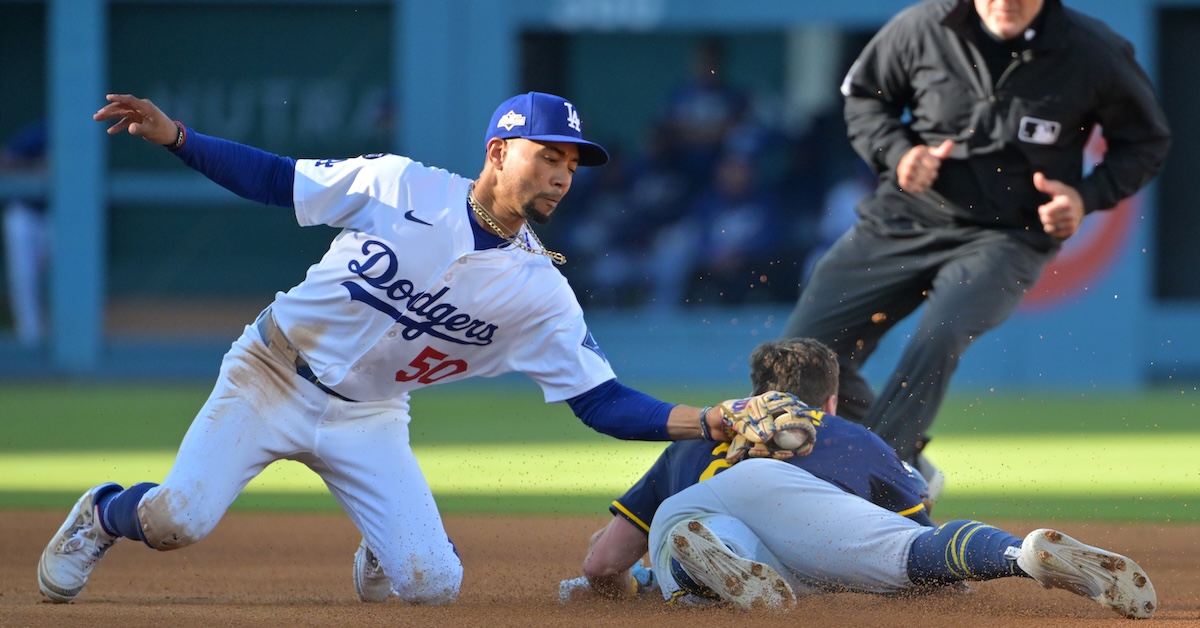
Throughout the playoffs, when it felt like each sport concerned no less than one shut play that everybody could be speaking in regards to the subsequent day, I attempted my hand at breaking down replays. I captured display screen recordings of all of the replay angles, dragged them into iMovie, and had a ball determining the precise second when a cleat grazed the plate or a glove caught the runner’s elbow. I’d prefer to assume I even obtained fairly good at it, so if anyone within the Replay Command Middle over on Sixth Avenue ever wants a weekend off, I’ll gladly cowl a shift or two. Once you break down footage that manner, you be taught that shut performs occur on a regular basis they usually’re a lot nearer than you understand. I’ve began to imagine that we may do a greater job of dealing with the closest of these performs. On tags and pressure performs, which make up roughly three-quarters of all replay challenges, I believe it’s time we alter the replay guidelines in order that the tie goes to the runner.
Earlier than we get too deep into my reasoning, we have to begin by addressing whether or not or not the tie goes to the runner in keeping with the present letter of the regulation. Whereas all of us discovered that rule as kids, it’s not how the sport operates on the highest degree. As David Wade wrote in The Hardball Occasions in 2010, umpires don’t imagine the tie goes to the runner. They’re taught that there’s no such factor as a tie. Both the runner beat the ball or they didn’t, and that’s that. “There aren’t any ties and there’s no rule that claims the tie goes to the runner,” stated now retired umpire Tim McClelland in a 2007 interview. “However the rule guide does say that the runner should beat the ball to first base, and so if he doesn’t beat the ball, then he’s out.” That’s a significant league umpire declaring that the principles say unambiguously the tie goes to the fielder. Whereas it’s true that the Official Baseball Guidelines don’t point out ties, the remainder of the quote is deceptive.
Let’s set up that, logically, each time a runner touches a base, we will cut up the time into three distinct classes: earlier than, throughout, and after. That’s what McClelland was saying. The rule he was referring to was 5.06(a)(1), which leads off the part about what it means to occupy a base. It says: “A runner acquires the appropriate to an unoccupied base when he touches it earlier than he’s out.” The onus is on the runner to the touch the bottom first earlier than he’s out. However how does the runner grow to be out?
Rule 5.09 is titled Making an Out. It particulars the precise situations beneath which a runner is both secure or out. In different phrases, Rule 5.06(a)(1) depends on Rule 5.09. And guess what: Rule 5.09 flips issues across the different manner. Rule 5.09(a)(10) offers with pressure performs for the batter. It says the batter is out if “he or first base is tagged earlier than he touches first base.” The onus is on the fielder to make the tag first. Rule 5.09(b)(6) offers with pressure performs for the runner, and it says the identical factor: “He or the following base is tagged earlier than he touches the following base.” Backyard selection tag performs are lined beneath Rule 5.09(b)(4). The runner is out when “He’s tagged… when off his base.” If the tag comes at the very same time that the runner reaches the bottom, effectively, the runner was tagged whereas on his base, so he’d be secure.
If these have been the one three guidelines in query, I’d be strongly inclined to say that the rulebook is crystal clear. The tie goes to the runner, as a result of the runner isn’t out except the tag comes first. That’s what it says within the three easiest, most basic guidelines about what constitutes an out, and people three guidelines cowl the overwhelming majority of safe-out calls on the bases. So whereas Rule 5.06(a)(1) says the runner occupies the bottom by touching it earlier than they’re out, that doesn’t matter all that a lot, as a result of the principles that really say what constitutes an out put the onus squarely on the fielder to make the tag first.
There’s only one downside: These aren’t the one three guidelines that point out timing. I searched the rulebook and located six different befores and afters. They’re wildly inconsistent. If a runner misses a base after which tries to return to it, a notice in Rule 5.06(b)(3)(D) says the tag has to return first. Onus on the fielder. If the runner steals unnecessarily as a result of it’s ball 4, however overruns the bottom, a remark in Rule 5.06(b)(6) says they must return earlier than the tag. Onus on the runner. But when the very same scenario occurs as a result of the runner misses the bottom, a notice in Rule 5.06(b)(3)(D) says the tag has to return first. Onus on the fielder once more. I gained’t bore you with the opposite three, however my level is that when we get into the technicalities, the rulebook isn’t very constant.
No matter conclusion you may draw from this mishmash of befores and afters, it’s apparent that the principles don’t come wherever close to saying what McClelland believes they do. An affordable individual may definitely disagree, however my studying leads me to imagine that the tie ought to go to the runner. The three massive guidelines about what constitutes an out would point out that the tie goes to the runner, whereas the opposite six conditions cope with technicalities, edge circumstances that make up such a small proportion of the general variety of safe-out choices that they could as effectively be a rounding error.
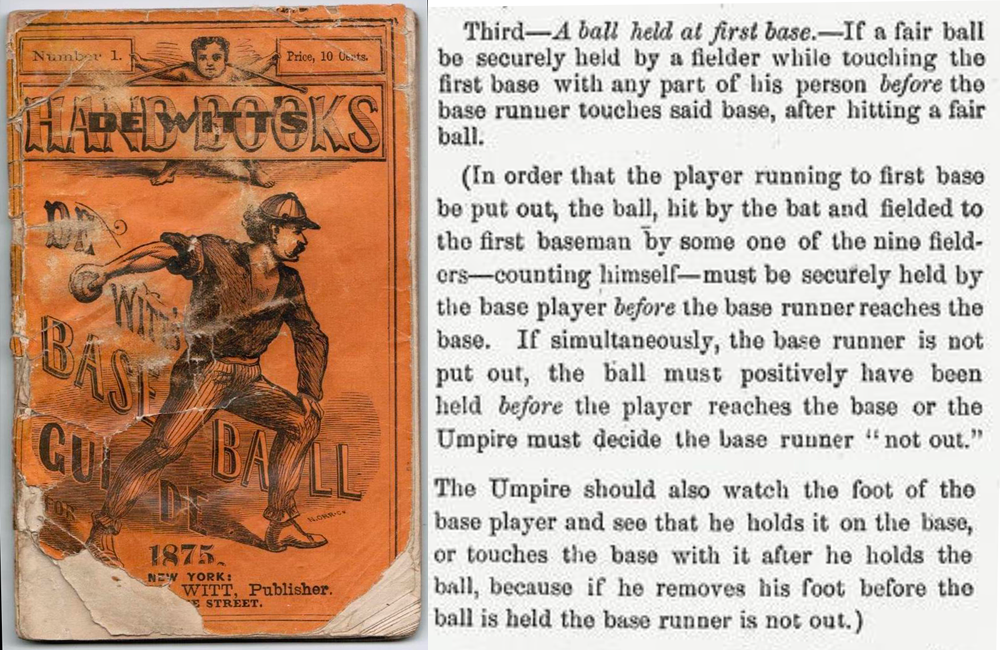
Now, an affordable individual may additionally argue that that is all simply semantics. Perhaps the writers of the rulebook simply used the phrases “earlier than” and “after” interchangeably, based mostly on no matter allowed them to write down every explicit rule within the easiest way attainable. The rulebook may have talked about ties, however omitting them was virtually definitely a selection. They be certain that to spell out what occurs for different edge circumstances, like balls hitting the foul line and the very edges of the strike zone. Baseball Almanac notes that the 1875 De Witt’s Base Ball Umpire’s Information, edited by the legendary Henry Chadwick, made it clear that the tie went to the runner. “So that the participant operating to first base be put out,” it says in a parenthetical, “the ball…have to be securely held by the bottom participant earlier than the bottom runner reaches the bottom. If concurrently, the bottom runner just isn’t put out, the ball should positively have been held earlier than the participant reaches the bottom or the Umpire should resolve the bottom runner ‘not out.’” Different modern sources agreed. John Thorn, MLB’s official historian, instructed The New York Occasions in 2012 that the idea was most likely by no means codified within the guidelines deliberately, as a result of “it provides the umpire one thing of an out, an excuse if he can name a tie.”
Nonetheless, it makes all of the sense on the earth that umpires are instructed to assume that manner. They’re on the sphere within the warmth of the second. They should be decisive and authoritative. McClelland acknowledged as a lot. His quote continued: “So it’s important to make the choice. That’s why umpires are paid the cash they’re, to make the choice on if he did or if he didn’t.” Acknowledging a tie is basically an admission of uncertainty, and an unsure umpire will get eaten alive. As such, umpires are taught a mantra that sounds prefer it was coined by Eleanor Shellstrop: “When doubtful, bang him out.” Umpires have to mission authority, and punching anyone out is extra authoritative than calling them secure. That’s why rubbish politicians crow about how they’re robust on crime reasonably than proposing the humane insurance policies which have really been confirmed to mitigate crime.
Once you’re the one making the decision in a stadium filled with followers with every little thing on the road, refusing to acknowledge the existence of ties is totally comprehensible, possibly even mandatory. I’m simply undecided why that coverage ought to lengthen to the eliminated confines of the Replay Command Middle. This interpretation of guidelines which are imprecise – intentionally so, in the event you imagine the league’s personal historian – may use an replace for the problem period, as a result of if there’s one factor video assessment has taught us, it’s that ties occur on a regular basis.
For the reason that introduction of replay in 2014, we’ve seen 15,744 challenges and seven,559 calls overturned, in keeping with Baseball Savant. It simply so occurs that Rocky Colavito retired with 7,559 profession plate appearances, so over the previous 12 years, replay has allowed us to repair one total Colavito’s value of calls that, with the good thing about slow-motion, have been clearly incorrect.
In 2025, just below 52% of challenges ended with the decision being overturned, the best price ever. For some motive, Savant doesn’t provide an extra breakdown of the 48% of calls that have been upheld. Generally the umpire pronounces that the video replay has confirmed the decision; typically they announce that the decision merely stands. The latter implies that umpire within the replay room couldn’t definitively say inside the two-minute time restrict whether or not the decision was right, “as a result of lack of clear and convincing proof.” Thankfully, Shut Name Sports activities has been monitoring that individual distinction, and whereas their numbers are old-fashioned, they’re ok to offer us some normal contours. Roughly 20% of calls are confirmed, whereas 28% merely stand. That’s to say that 28% of the time, in keeping with an umpire whose entire job that day is to research shut calls within the Replay Command Middle, utilizing super-slow-motion video from the mixed crews of two broadcast groups wielding the fanciest high-speed, hi-res cameras obtainable, it’s nonetheless unattainable to say for sure whether or not the runner was secure or out. That sounds an terrible lot like a tie to me! At this level, I’ll keep away from the temptation to make a detour into Zeno’s paradoxes or infinite set idea and easily acknowledge that have been it attainable for us to set our cameras to an infinitely excessive body price, we’d at all times have the ability to inform which factor occurred earlier than which. However that’s by no means going to occur.
When you’ve drunk deeply from the effectively of super-slow-motion replays, you understand that some performs actually are unattainable to name with certainty. The our bodies of the gamers concerned typically block what would in any other case be one of the best view of the tag. Because it nears the bag, the runner’s hand or cleat often kicks up a wave of filth forward of it. This wave obscures the bottom, making it arduous to inform precisely when contact happens. It’s even more durable at dwelling plate, the place the hand or cleat doesn’t run right into a stable base, however merely glides throughout the highest of the plate. As a result of most cameras are stationed at considerably elevated positions, and most tags are made with the fielder catching the ball excessive after which sweeping downward to make the tag, the again aspect of the glove often blocks the view of the exact second when the entrance aspect really touches the runner. If we have been to outfit every base with an array of two,000-frame-per-second Edgertronic cameras at numerous strategically-selected angles, we may absolutely reduce that 28% determine down considerably, however I doubt we’d ever strategy zero. We’ll at all times see performs which are, for all intents and functions, ties:
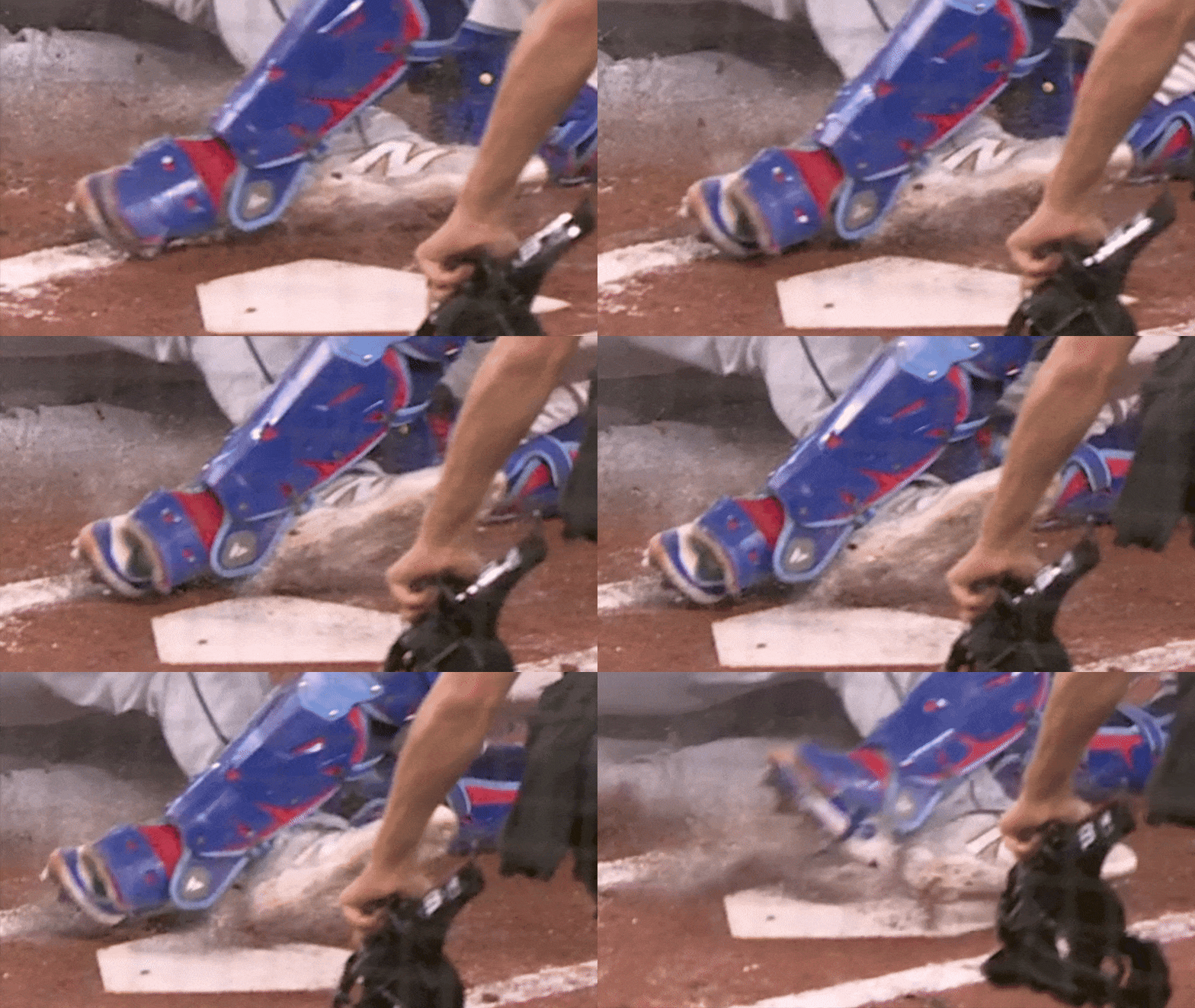
It’s one factor for umpires on the sphere to fake ties don’t exist with a view to perform their duties with out compunction. It’s one other to make that very same assertion if you’re analyzing footage that slices every second right into a minimal of 29.97 frames and also you nonetheless can’t inform what occurred greater than 1 / 4 of the time. At that time, you’re dwelling in denial. Ties are actual. They occur roughly 400 instances a season, and roughly 300 of these are on forces and tag performs. That’s a pair instances an evening.
When Main League Baseball adopted expanded instantaneous replay in 2014, it basically adopted the mannequin that the NFL has been utilizing since 1999. When the play is just too near name, it defaults to the unique name on the sphere. It’s comprehensible. No one desires to undermine the umpires. Their job is hard sufficient already. It is smart to strengthen their authority by implying that when doubtful, their view is the appropriate one. It additionally represents the smallest departure from the best way the sport labored earlier than replay, which was a precedence again when expanded replay was launched. “We’re actually [targeting] the dramatic miss, not all misses” stated Tony La Russa, who served on the committee that established the system. But when your objective is getting calls proper, you possibly can argue that that is the worst solution to deal with performs which are too near name.
First, even when the umpire in New York can’t say for sure what occurred, spending a pair minutes analyzing one of the best footage obtainable will at all times give them a greater concept of what occurred than the umpire who obtained one crack at it in actual time. It’s simply unattainable that it wouldn’t. Accuracy would little question be vastly improved if the replay umpire obtained the ultimate say, it doesn’t matter what their diploma of certainty, utilizing their greatest judgment similar to the umpire on the sphere.
Now let’s return to the 72% of challenges which are settled definitively by the replay umpire — that’s the 52% of calls which are overturned plus the 20% that confirmed. We’re setting apart the 28% which are too near name. A bit of arithmetic tells you that of this subset, the preliminary name on the sphere was proper 28% of the time and flawed 72% of the time. I understand that is complicated as a result of the chances occur to be the identical, however what this implies is that when the replays are clear sufficient that the umpire in New York could make a definitive name, they’re clear in a single explicit route: the umpire is flawed almost three-quarters of the time. And as soon as once more, these are the performs that aren’t fairly as shut! Why precisely are we deferring to the umpire on the sphere on performs which are even nearer? As a result of that’s how the NFL does it? To spare their emotions? That final problem really is spelled out very clearly within the rulebook: “Umpire dignity is essential however by no means as essential as ‘being proper.’” Logic says that if umpires are flawed 72% of the time on the challenged calls which are clear sufficient to be definitive on video, they most likely fare even worse on the performs which are too near name. Probably the most correct solution to deal with them may be simply to reverse the decision on the sphere as a matter of coverage! Even flipping a coin would absolutely be way more correct.
These are clearly capricious strategies. I don’t imply to denigrate the umpires in any manner. They’ve an awfully tough job, and similar to the gamers on the sphere, they’re one of the best on the earth at what they do. However it’s apparent that there’s a sure subset of performs that basically are too near name, even once we push previous the boundaries of human physiology and resort to probably the most superior know-how obtainable. And on the slightly-less-close calls, the report of the umpires on the sphere isn’t sterling, fairly probably as a result of when the play is shut, they’ve been taught to simply name the runner out by default. That itself is one argument in favor of giving the tie to the runner when the replay is just too shut. When umpires aren’t certain, they bang the runner out, which implies that on the very closest of performs, a lot of them ties that arguably ought to be going to the runner, they’re slightly bit biased within the different route. If you’d like proof of that, look no additional than the truth that in 2025, 70% of the challenges on shut performs at first base have been overturned! If the earlier percentages maintain, that implies that the decision on the sphere was solely confirmed round 13% of the time!
Deciding these ties in favor of the runner would additionally push the sport within the route the league desires anyway. Every year, it will flip a number of hundred out calls into secure calls, boosting offense barely with out furthering the boom-and-bust cycle of dwelling runs and strikeouts. It will additionally present a slight reprieve from the low-BABIP doldrums, immediately including roughly two factors to the league price. The downstream results would encourage the thrilling elements of the sport that everybody desires to see extra of: placing the ball in play, stealing, and taking the additional base. Perhaps these results could be too small for us to note every day – these ties would solely crop up as soon as each eight video games – however they might be actual and measurable.
Defaulting to the judgment of the umpire on the sphere on even more durable performs makes loads of sense from a human perspective. It helped ease the sport into the period of expanded replay with out upsetting the present norms an excessive amount of. However purely by way of getting the right name, it’s most likely the worst possibility obtainable, and it entails the denial of a actuality that we will all see: ties occur quite a bit.
We’re now 12 years and several other rule tweaks into expended replay. Why not hold enhancing it? The league has up to date and clarified the principles of the replay system a number of instances. It’s banned the shift, enlarged the bases, applied the pitch clock, and restricted pickoff makes an attempt. It’s implementing an ABS problem system for balls and strikes this yr. I believe it’s truthful to say that Main League Baseball is now not simply involved in regards to the dramatic miss.
Lastly, I can’t deny that having the sport conform to what we have been all taught as youngsters has knowledgeable my opinion. The tie would lastly go to the runner, and that will really feel proper. To that finish, I’d notice that it’s not simply followers who imagine the tie goes to the runner. Watch a number of challenges and I assure that you just’ll hear one of many broadcasters point out it as a matter after all. The play-by-play individuals have spent their total careers calling baseball. Almost all the colour commentators are former gamers who’ve spent their total lives in and across the sport. They’ve producers and researchers of their ear. They usually imagine that the tie goes to the runner! It’s fairly attainable that the umpires – together with the true sickos, after all – are the solely ones on the opposite aspect of this argument. So whereas this may occasionally really feel like a dramatic shift, it will additionally simply deliver the principles into alignment with how almost all of us, each inside and outdoors the sport, already perceive them to work.