
All WAR figures seek advice from the Baseball Reference model except in any other case indicated.
Denny McLain was the ace of the 1968 Tigers, going 31-6 with a 1.96 ERA en path to each the American League Cy Younger and Most Useful Participant awards, however throughout that 12 months’s World Sequence towards the defending champion Cardinals, he was outshined by teammate Mickey Lolich. Whereas McLain began and misplaced Video games 1 and 4 earlier than recovering to throw a complete-game victory in Recreation 6, Lolich went the space in successful Video games 2, 5, and seven, the final of which secured the Tigers’ first championship in 23 years. By outdueling Bob Gibson — the earlier 12 months’s World Sequence MVP and the creator of a 1968 season to rival McLain’s — in Recreation 7, Lolich secured spots each in Fall Traditional lore and the pantheon of Detroit sports activities heroes.
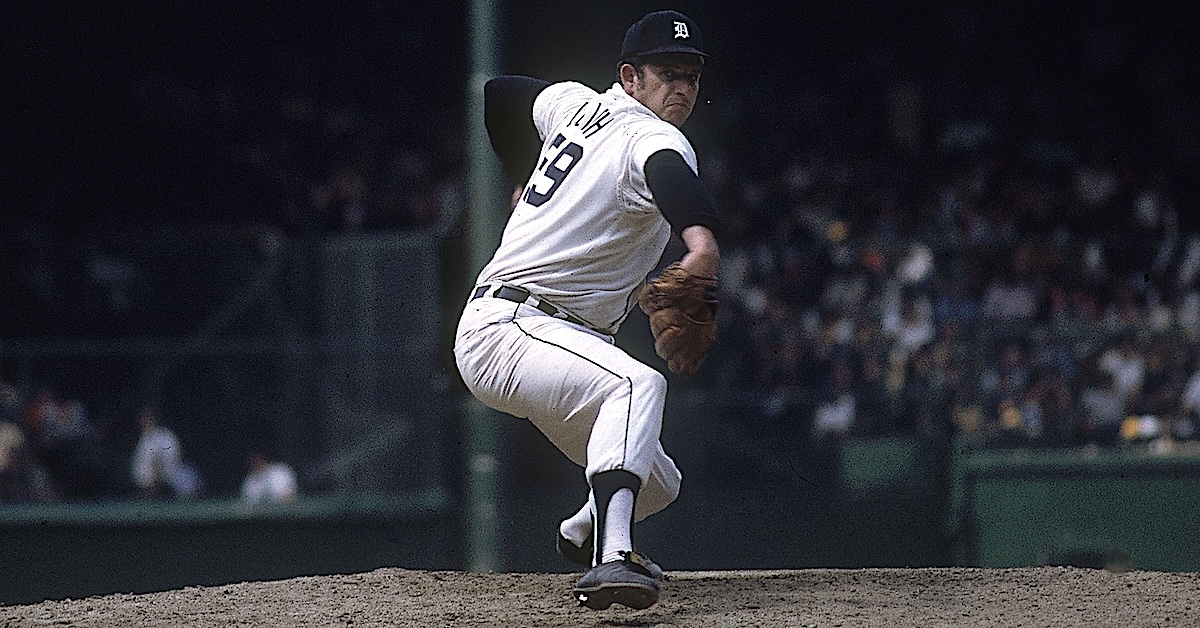
Lolich died final Wednesday at an assisted residing facility in Sterling Heights, Michigan on the age of 85. Past his World Sequence heroics, he was a three-time All-Star with a pair of 20-win seasons and top-three Cy Younger finishes. An influence pitcher whose fastball was clocked as excessive as 96 mph, he struck out greater than 200 hitters in a season seven occasions, with a excessive of 308 in 1971. Even at present, he’s fifth in strikeouts by a lefty with 2,832, behind solely Randy Johnson, Steve Carlton, CC Sabathia, and Clayton Kershaw, and twenty third amongst all pitchers.
However for as a lot as something, Lolich is remembered for piling up innings. In that 1971 season, he went 25-14 whereas making 45 begins, finishing 29 of them and totaling 376 innings — main the AL in all of these classes besides losses — with a 2.92 ERA (124 ERA+). He additionally topped 300 innings in every of the subsequent three seasons, together with 327 1/3 in 1972, when he went 22-14 with a 2.50 ERA.
“No pitcher in 125 years of Tigers big-league life was so tied to sturdiness, or so paired his seeming indestructibility with such excellence throughout his time in Detroit,” wrote the Detroit Information’ Lynn Henning in his tribute to Lolich. “No pitcher in Tigers historical past fairly matched his knack for taking over inhuman workloads that might forge even better gallantry at big-game moments.”
“Lolich was a gallon of ice cream if you solely needed a cone, merely an amazing pitcher, and for seven or eight years the hardest lefty within the league,” stated slugger Reggie Jackson in 2015. Added Jackson, who hit simply .203/.261/.375 towards Lolich in 69 plate appearances, “When he stepped on the mound at 1 p.m., you knew he could be there till the tip and he by no means missed a begin. As we speak, they speak about 200 innings being particular. Hell, Mickey had 200 innings by August 1.”
You Aren’t a FanGraphs Member
It appears such as you aren’t but a FanGraphs Member (or aren’t logged in). We aren’t mad, simply disillusioned.
We get it. You need to learn this text. However earlier than we allow you to get again to it, we might wish to level out a number of of the great the explanation why it’s best to turn out to be a Member.
1. Advert Free viewing! We cannot bug you with this advert, or another.
2. Limitless articles! Non-Members solely get to learn 10 free articles a month. Members by no means get reduce off.
3. Darkish mode and Traditional mode!
4. Customized participant web page dashboards! Select the participant playing cards you need, within the order you need them.
5. One-click knowledge exports! Export our projections and leaderboards on your private tasks.
6. Take away the photographs on the house web page! (Truthfully, this does not sound so nice to us, however some folks needed it, and we like to provide our Members what they need.)
7. Much more Steamer projections! We now have handedness, percentile, and context impartial projections accessible for Members solely.
8. Get FanGraphs Stroll-Off, a custom-made 12 months finish overview! Discover out precisely the way you used FanGraphs this 12 months, and the way that compares to different Members. Do not be a sufferer of FOMO.
9. A weekly mailbag column, completely for Members.
10. Assist help FanGraphs and our whole employees! Our Members present us with crucial sources to enhance the location and ship new options!
We hope you will contemplate a Membership at present, for your self or as a present! And we understand this has been an awfully lengthy gross sales pitch, so we have additionally eliminated all the opposite adverts on this article. We did not need to overdo it.
That 1971 marketing campaign was the one time Lolich led his league in innings, as a result of the next season, White Sox knuckleballer Wilbur Wooden — who had thrown 334 innings the 12 months earlier than — threw 376 2/3 innings over the course of 49 begins, 20 of which he accomplished. Wooden adopted up with an AL-high 359 1/3 innings in 1973, then 320 1/3 innings in ’74, which merely ranked fourth behind future Corridor of Famers Nolan Ryan (332 2/3), Fergie Jenkins (328 1/3), and Gaylord Perry (322 1/3).
Wooden, a lefty himself, received at the least 20 video games in his 4 300-inning seasons, made three All-Star groups, and completed third within the 1971 Cy Younger race behind Vida Blue and Lolich, then second in ’72, behind Perry and forward of Lolich. He died on January 17 in Burlington, Massachusetts on the age of 84.
Whereas at reverse ends of the spectrum stylistically, Lolich and Wooden had a pair issues in frequent moreover being rubber-armed lefties competing in shut proximity. Each benefited from the tutelage of maverick pitching coach Johnny Sain, a three-time All-Star whose second act nurturing hurlers whereas bucking the institution — famously, he eschewed operating, inspired throwing on an almost-daily foundation, and exhorted his pitchers to combat for greater salaries — introduced him even better acclaim. And neither Lolich nor Wooden was constructed like a top-flight athlete. Each leaned into that actuality, and modern media dwelled upon it. Although listed at 6-foot-1 and 170 kilos on his Baseball Reference web page, by his personal account Lolich was nicely over 200 kilos in his heyday and round 220 later in his profession. In his 1968 World Sequence protection, the The New Yorker’s Roger Angell described Lolich as “a swaybacked, thick-waisted left-hander.” For a 1972 Time article known as “Fats Man on the Mound,” the hurler himself claimed that massive bellies ran in his household, and continued:
“I suppose you can say I’m the redemption of the fats man,” he cheerfully observes. “A man will likely be watching me on TV and see that I don’t look in any higher form than he’s. ‘Hey, Maude,’ he’ll holler. ‘Get a load of this man. And he’s a 20-game winner.’
“His left arm was however an extension of a uniquely structured athlete. Lolich was 6-foot-1 and had uncanny rotation of hips that had been even broader than the stomach that grew to become one thing of a trademark by means of his later big-league years,” wrote Henning, who elsewhere famous that Lolich by no means even reported a sore arm, not to mention frolicked on the disabled listing for an arm harm. “His mid-structure shifted with such ease that his arm was spared stress that got here with throwing a big-league pitch — a level of pressure that has lengthy bedeviled and betrayed pitchers not in a position to soak up the repetitions on which Lolich appeared to thrive.”
Within the wake of his Recreation 7 victory, Lolich defined that working by means of fatigue helped his sinkerball. “After I obtained slightly drained the ball sank eight inches as a substitute of 4,” he advised reporters.
Of Wooden, listed at 6 toes and 180 kilos on Baseball Reference, Peter Gammons wrote in a 1973 Boston Globe function, “Wilbur Wooden is a plumber within the offseason, and for that he may cross. Or a taster in a beer manufacturing facility.” The article’s subheadline described him as “balding [and] fleshy,” and inside, Wooden conceded, “I’ve been fats all my life. I used to be a fats child.”
“On the mound, he shows a snug expanse of tum and the stiffish-looking knees of a confirmed outdoorsman, and thus resembles a left-handed accountant or pastry chef on a Sunday outing,” wrote Angell in 1977.
With their everyman physiques, the 2 southpaws reminded the baseball world that pitching prowess is available in all styles and sizes. They had been a part of a era of ultra-durable pitchers who debuted within the early Sixties and thrived within the ’70s, a time of four-man rotations and scoring ranges so low that in 1973 the AL launched the designated hitter to extend offense. A number of of their cohorts pitched nicely into the Nineteen Eighties, with six (Carlton, Perry, Ryan, Phil Niekro, Tom Seaver, and Don Sutton) reaching 300 wins and two others falling simply quick however reaching 3,000 strikeouts (Jenkins and Bert Blyleven). All eight are within the Corridor of Fame, whereas Wooden, who retired after the 1978 season, and Lolich, who retired (for the second time) after ’79, aren’t. Wooden, who went 164-156 with a 3.44 ERA (114 ERA+) in 2,684 innings, compiled 50.0 profession WAR with a 42.8 S-JAWS, which ranks 106th within the latter class, simply above former White Sox teammate and Corridor of Famer Jim Kaat. Lolich, who went 217-191 with a 3.44 ERA (104 ERA+) in 3,638 1/3 innings, accrued 48.0 WAR and 39.7 S-JAWS, tied with Blue for 148th and nonetheless forward of six Corridor of Famers, together with Jack Morris and one other modern, Catfish Hunter. Their repeated means to shoulder such large workloads places each within the firm of their Cooperstown-bound contemporaries:
Most 300-Inning Seasons Since 1947
Supply: Baseball Reference
+ = Corridor of Famer
The pair threw extra innings in a single season than any pitcher because the begin of the Stay Ball period in 1920. Whereas they benefitted from 162-game schedules versus the 154-gamers of their predecessors, the 1972 season was shortened by a gamers’ strike. Just one pitcher from the earlier half-century even approached their totals:
Most Innings Pitched in a Season Since 1920
| Participant | Group | Season | W-L | IP | ERA | WAR |
|---|---|---|---|---|---|---|
| Wilbur Wooden | CHW | 1972 | 24-17 | 376 2/3 | 2.51 | 10.7 |
| Mickey Lolich | DET | 1971 | 25-14 | 376 | 2.92 | 8.5 |
| Bob Feller | CLE | 1946 | 26-15 | 371 1/3 | 2.18 | 10.0 |
| Grover Alexander | CHC | 1920 | 27-14 | 363 1/3 | 1.91 | 12.0 |
| Wilbur Wooden | CHW | 1973 | 24-20 | 359 1/3 | 3.46 | 7.6 |
| George Uhle | CLE | 1923 | 26-16 | 357 2/3 | 3.77 | 6.0 |
| Dizzy Trout | DET | 1944 | 27-14 | 352 1/3 | 2.12 | 9.3 |
| Pink Faber | CHW | 1922 | 21-17 | 352 | 2.81 | 9.6 |
| City Shocker | SLB | 1922 | 24-17 | 348 | 2.97 | 7.1 |
| Robin Roberts | PHI | 1953 | 23-16 | 346 2/3 | 2.75 | 9.8 |
| Steve Carlton | PHI | 1972 | 27-10 | 346 1/3 | 1.97 | 12.1 |
| Gaylord Perry | CLE | 1973 | 19-19 | 344 | 3.38 | 7.8 |
| Bob Feller | CLE | 1941 | 25-13 | 343 | 3.15 | 8.2 |
| Gaylord Perry | CLE | 1972 | 24-16 | 342 2/3 | 1.92 | 10.8 |
| Phil Niekro | ATL | 1979 | 21-20 | 342 | 3.39 | 7.4 |
Supply: Baseball Reference
From 1968–77, at the least 4 pitchers yearly recorded 300 innings aside from ’76, when solely Cy Younger winners Palmer and Randy Jones did. After 4 reached the edge in 1977, nevertheless, solely Niekro (1978 and ’79) and Carlton (1980) did so.
…
Michael Stephen Lolich was born on September 12, 1940, the one youngster of fogeys Steve (a director of metropolis parks) and Margarite Lolich in Portland, Oregon. He was naturally right-handed, however as a two-year previous fractured his left collarbone by crashing his tricycle right into a parked bike, which fell on high of him. He spent 4 months in a forged, and after it was eliminated, medical doctors suggested Margarite to make him use his left hand to strengthen that shoulder. “I’ve been throwing left-handed ever since I began choosing up blocks southpaw fashion,” he stated in 1964.
Lolich quickly graduated to “throwing figs at metropolis buses 150 toes from the highest of my grandparents’ storage,” he stated in 2015. When he was 11, his father volunteered him for granted fielder for a short-handed staff of 14- and 15-year-olds. “We had been getting beat fairly dangerous and I believed, ‘I can throw pretty much as good as these guys,’ so I volunteered to pitch,” Lolich wrote in his 2018 autobiography, Pleasure in Tigertown. “To the shock of everybody, I blew all of the batters away as a result of they couldn’t hit my quick ‘fig.’”
The teenage Lolich starred whereas setting state data for strikeouts; his groups made it to the 1955 and ’56 Babe Ruth League World Sequence and the ’57 American Legion World Sequence. He struck out 18 for Lincoln Excessive College within the state championship recreation in 1956, and after going 19-5 as a senior in ’58, signed with the Tigers for a $30,000 bonus. He battled extreme management issues throughout his first three years within the minors (1958–61), strolling 98 hitters in 104 innings at two stops in 1959, and over seven batters per 9 in every of the subsequent two seasons, remaining viable solely as a result of he notched much more strikeouts.
Getting struck within the face by a line drive whereas at Triple-A Denver in 1962 didn’t assist. Lolich had already peeved the Tigers by delaying his arrival to spring coaching so he may take a civil-service examination, his backup plan to baseball. When Tigers basic supervisor Jim Campbell demoted Lolich to A-level Knoxville, the place he’d spent components of 1959–61 clashing with supervisor Frank Carswell, the 21-year-old pitcher refused to report, and as a substitute went residence to Portland. In putting out 16 batters in a reduction stint for a neighborhood semipro staff, he caught the eye of somebody from the Portland Beavers, the Triple-A affiliate of the Kansas Metropolis A’s. They organized to lease Lolich, and underneath the instruction of pitching coach Gerry Staley, a former main leaguer, Lolich added a sinker to a repertoire that already included a four-seamer, curve, and changeup, and traded velocity for command, slicing his stroll charge to a manageable 3.9 per 9 whereas going 10-9 with a 3.95 ERA.
After barely lacking the reduce for the Tigers within the spring of 1963, Lolich briefly pitched at Triple-A Syracuse earlier than being known as as much as debut on Could 12, 1963. He spun two shutout innings in reduction towards Cleveland, putting out the primary two batters he confronted, Max Alvis and Sam McDowell. He made his first begin on Could 21 towards the Orioles, and obtained his first win on Could 28 towards the Angels, tossing an eight-hit full recreation whereas permitting only one unearned run. In 18 begins and 15 reduction appearances totaling 144 1/3 innings, he went 5-9 with a 3.55 ERA (105 ERA+).
Lolich broke out in 1964, going 18-9 with a 3.26 ERA in 232 innings, finishing 12 of 33 begins and making 11 reduction appearances, as nicely, typically inside a day or two of an early hook from a begin. Supervisor Chuck Dressen, who had taken over in mid-1963, suggested Lolich that he had been tipping his pitches by elevating his arms greater on fastballs than on breaking balls, so the hurler altered his windup. He threw six shutouts, good for fourth within the league, together with three in a row from September 1–9, a part of a 30 2/3-inning scoreless streak.
Lolich turned in uneven performances over the subsequent 4 seasons, going a mixed 60-45 with a 3.59 ERA (92 ERA+) and a internet of simply 4.9 WAR. He closed the 1965 season with 5 straight full video games, throughout which he allowed simply seven runs (4 earned), besides, his 3.44 ERA that 12 months amounted to a modest 102 ERA+; his 226 strikeouts ranked second within the league, his first of 4 occasions as runner-up in that class. He was dreadful in 1966 (4.77 ERA, 73 ERA+, -1.5 WAR), and whereas he meshed with Sain when the coach arrived in ’67, he scuffled for the primary half of that season, too. In late July, within the midst of a private 10-game shedding streak, Lolich was known as as much as spend 12 days of lively responsibility within the Michigan Air Nationwide Guard, a daily prevalence for him from 1963–69. Amid ongoing rioting in Detroit, he initially commanded a 12-man unit in command of defending a police radio tower; quickly he was shifted to a motor pool as a result of higher-ups didn’t desire a famend athlete both to shoot at anyone (Lolich’s means as a marksman had certified him for that project) or to be shot at. An nameless demise menace from the Black Panthers led to FBI snipers being positioned on the roof of Tiger Stadium throughout his first two post-riot begins.
“Lastly, as I threw my final warm-up pitch earlier than the primary inning, Norm Money came to visit to me on the mound, and he stated ‘Mick, I want you a number of luck on this recreation, and I’ll by no means speak to you once more, as a result of two targets are [harder] to hit than one,’” Lolich advised The Athletic’s Katie Strang in a 2018 interview. “And he went again to first base.”
Regardless of that additional stress, Lolich went 9-1 with a 1.31 ERA over 12 begins upon returning, closing the season with a 28 2/3-inning scoreless streak within the midst of a four-way pennant race. His three-hit shutout of the Angels within the opener of a September 30 doubleheader moved the Tigers right into a tie with the Pink Sox and Twins for first place with three video games to play. Alas, Detroit misplaced the nightcap and break up one other doubleheader the subsequent day, ending one recreation again.
Lolich’s 1968 season had its ups and downs, as nicely; a tough July led to his exile into the bullpen for the primary half of August, and whereas he rebounded with three shutouts in a four-start span and completed 17-9, his 3.19 ERA translated to only a 95 ERA+. Matched up towards the Cardinals within the World Sequence, he adopted McLain’s Recreation 1 loss with a six-hit, one-run full recreation through which he hit a solo residence run off Nelson Briles, the one one he would hit in his 20-year skilled profession. “Two strikes on me, and I made a decision to swing on the subsequent white factor that flew by,” Lolich advised Kenny Eggers of the Portland Tribune in 2018. “(Briles) hit the center of my bat and the ball went out of the park. I obtained drained operating the bases. I made a decision I’d by no means hit one other (homer) — too far to run.”
The Cardinals chased McLain within the third inning of what grew to become a 10-1 rout in Recreation 4 to go up three video games to 1, however Lolich staved off elimination by scattering 9 hits and three runs in a 5-3 victory in Recreation 5. Tigers supervisor Mayo Smith determined his finest wager to win the sequence was to carry his high two starters again on two days of relaxation, bypassing Recreation 3 starter Earl Wilson, who’d additionally been knocked out early. McLain regrouped to throw an entire recreation in a 13-1 romp, pushing the sequence to Recreation 7.
For six innings at Busch Stadium, Lolich and Gibson traded zeroes, with the previous choosing off each Lou Brock and Curt Flood at first base within the sixth. “I used to be requested to pitch 5 innings,” Lolich advised Strang. “I pitched 5 innings, walked off the mound and stated, ‘Nicely, I did my job.’ My supervisor was asking for me and stated, ‘May you pitch yet one more?’ And I felt fairly good, so I pitched yet one more and walked off, and he says ‘Are you able to pitch yet one more?’”
The Tigers broke by means of for 3 runs towards Gibson within the seventh. “I walked up and tapped [Smith] on the shoulder, and I stated ’Nicely, now I’ll end this factor for you,’ and he stated, ‘That was simply what I needed to listen to.’ And I completed it for him.”
Lolich grew to become the ninth pitcher to begin and win three video games in the identical World Sequence, and simply the fourth of the Stay Ball period. No person has achieved it since:
Pitchers with Three Wins as a Starter
in a Single World Sequence
* = World Sequence was best-of-nine as a substitute of best-of-seven.
Lolich was named the World Sequence MVP. Perks included a Dodge Charger, a phony-baloney position in a “10-day tenting journey” Dodge shot for an promoting brochure, and an invite from vice chairman Hubert Humphrey to look at the liftoff of Apollo 8, as Lolich was an area buff.
After that triumph, Lolich got here into his personal; over the subsequent seven seasons, he would common 18 wins, 302 innings (!), 231 strikeouts, and 5.3 WAR whereas pitching to a 3.41 ERA (109 ERA+). He made his first All-Star staff in 1969, going 19-11 with a 3.14 ERA (119 ERA+) and 271 strikeouts (second once more) in 280 2/3 innings. Throughout a spring coaching bullpen session in 1971, whereas coming off a 14-19, 3.80 ERA season, Lolich found out the way to throw the reduce fastball that Sain (who left the Tigers in late 1969 after butting heads with Smith) had tried to show him. “I couldn’t make my fastball to hit the surface nook. I used to be getting very annoyed,” Lolich recalled to Eggers. “I gave the ball slightly flip to get some spin on it, and rattling, there was the reduce fastball.”
That discovery arrange Lolich’s run of 300-inning seasons, which included All-Star alternatives in 1971 and ’72 as he received 20 video games twice and completed third within the league in WAR each occasions (8.5 WAR in 1971, 7.4 in ’72). He helped the Tigers win the AL East in 1972 with an 86-70 report within the strike-shortened season — putting out 15 Pink Sox in his ultimate begin — however the staff misplaced to the A’s within the ALCS. Lolich held Oakland to 1 run over the primary 10 innings in Recreation 1, however departed after permitting back-to-back singles to begin the eleventh; these grew to become the tying and successful runs, aided by Al Kaline’s throwing error. Lolich allowed one run over 9 innings in Recreation 4, however the A’s received that one in 10, as nicely.
Because the Tigers slipped from 85 wins in 1973 to 72 in ’74 to 57 in ’75, Lolich’s efficiency additionally dipped; he went 16-21 with a 4.15 ERA (91 ERA+ in ’74) and 12-18 with a 3.78 ERA in ’75. He received the two hundredth recreation of his profession by beating the White Sox in a rain-shortened seven-inning begin at Comiskey Park on Could 25, however late within the season, went on a 1-13 skid whereas the Tigers scored simply 14 runs in his 14 begins, getting shut out seven occasions. The streak lastly ended along with his 5-1 complete-game victory over Boston in what proved to be his finale as a Tiger. In December 1975, he was traded to the Mets in a four-player deal that despatched Rusty Staub to Detroit. Threatened with a pay reduce by Campbell, he waived his 10-and-5 rights to permit the deal.
Lolich didn’t take to New York, the place he battled with pitching coach Rube Walker over his routine, which included neither operating between begins nor icing afterwards. (He most popular scalding sizzling showers, a tip Tigers coach Jack Hommel gleaned from Satchel Paige.) After going 8-13 with a 3.22 ERA, Lolich retired at age 35, liberating himself from a two-year contract value about $125,000 a 12 months. He was fifth in main league historical past with 2,799 strikeouts on the time; the retirement seemingly price him membership within the 3,000-strikeout membership.
In February 1978, Lolich signed with the Padres, agreeing to work primarily as a reliever. Torn cartilage in his proper knee restricted him to 34 2/3 innings, however he posted a 1.56 ERA when accessible, and blended in a brand new knuckleball that Hoyt Wilhelm taught him. Within the spring of 1979 he predicted he may lengthen his profession one other 10 years because of the knuckler, however he pitched sparingly and poorly, and retired to open a doughnut store in Detroit’s northern suburbs, the place he realized to bake the doughnuts himself. “I frittered away the years after I performed baseball. You can even say I apple frittered them away,” he quipped.
“I simply want he had gone into the doughnut enterprise 10 years earlier,” recalled Jackson.
In retirement, Lolich additionally loved driving his bikes — a ardour courting again to his taking part in days, a lot to the Tigers’ chagrin — in addition to capturing, archery, banjo taking part in, ham radios, and even pilot classes.
…
Wilbur Forrester Wooden Jr. was born on October 22, 1941 in Cambridge, Massachusetts, the older of two kids of Wilbur Sr. and Svea Swenson Wooden. Wilbur Sr. starred because the captain of each the baseball and basketball groups at Boston College; he later pitched and performed shortstop on a semipro staff and labored within the wholesale meals enterprise.
Each Wilbur Jr. and his brother Jimmy had been athletic, taking part in soccer, hockey, and baseball because the calendar dictated. When Wilbur Jr. was in junior excessive, his father taught him a pitch he known as the palmball, thrown off the fingertips and imparting no rotation. Whereas it helped him stifle older hitters on Belmont sandlots, not till years later did the pitch evolve into Wooden’s signature knuckleball.
“I figured it have to be a superb pitch as a result of Dad was making more cash as a semipro than he was as a meals dealer,” stated Wooden. “However I couldn’t throw the palmball as a result of my hand was too small. I simply stored attempting to throw a ball that wouldn’t spin. It turned out to be the knuckler. I by no means knew a rattling factor about it — what stored it from rotating or the way to management it — so I by no means used it… I couldn’t afford to idiot round with it.”
At Belmont Excessive College, Wooden led the soccer staff to the Middlesex League championship as a junior, and starred as a defenseman on the hockey staff, however baseball had his coronary heart. Counting on a superb curveball and a much less imposing fastball, he went 24-2 and threw 4 no-hitters in his highschool profession, main Belmont to a state championship as a junior in 1959.
Invoice Stone, Wooden’s highschool coach, estimated that round 50 schools recruited him for one sport or one other. Scouts from the Cardinals, Braves, and hometown Pink Sox had been additionally — however solely to a level. Roland Hemond, the Braves’ farm director on the time and later the final supervisor of the White Sox, advised Gammons in 1973, “He was a fuzzy-faced, chubby little man who didn’t throw very arduous. I watched him throw batting apply and I couldn’t get very excited.”
Hoping to capitalize on native curiosity, the Pink Sox signed Wooden for a $25,000 bonus in 1960. After 4 appearances for D-level Waterloo, he was promoted to B-level Raleigh, the place he went 3-5 with a 3.84 ERA and 6.9 strikeouts per 9 in 77 1/3 innings as an 18-year-old. Over the winter, the Pink Sox added him to their 40-man roster and invited him to spring coaching, the place he struck out the facet towards the Giants in his Cactus League debut. After going 8-5 with a 3.15 ERA and eight.3 strikeouts per 9 for B-level Winston Salem, he was known as as much as the Pink Sox, whose attendance had taken successful with the retirement of Ted Williams. Simply over a 12 months after graduating highschool, the 19-year-old Wooden debuted on June 30, 1961 with 4 innings of mopup reduction in a 10-2 loss to Cleveland; he allowed two runs and struck out three, the primary of whom was Tito Francona, father of present Reds supervisor Terry Francona. He spent most of July with the Pink Sox, posting a 5.54 ERA in 13 innings earlier than being despatched all the way down to A-level Johnstown.
Wooden endured quite a few call-ups and demotions over the subsequent half-decade as he struggled to determine himself within the majors. “The little sonofagun simply couldn’t throw arduous sufficient,” former Pink Sox supervisor Johnny Pesky advised Gammons, “however he needed to pitch and tried his darnedest.” Wooden’s lone massive league look in 1962 was a 7 2/3-inning begin on September 22 towards the Senators. He made six begins for Pesky’s Sox in June and July of 1963, getting hit for a 5.43 ERA, then spent a pair months within the bullpen; of his 25 appearances, 24 had been in losses. After 4 early-season appearances for Boston in 1964, he spent many of the season at Triple-A Seattle (the place he’d additionally spent a part of 1963). In September he was offered to the Pirates, for whom he made one lengthy reduction look and two begins. He spent all of 1965 with Pittsburgh, making 33 reduction appearances and one begin; he put up a 3.16 ERA in 51 1/3 innings of largely low-leverage work, however the Pirates went 4-30 in these video games and he clashed with supervisor Harry Walker. On August 29, in his 67th main league recreation, he tossed a scoreless sixth inning towards the Astros; the sport was tied on the time, however the Pirates scored two runs within the backside of the inning, and once they held on, he was credited along with his first main league win.
Wooden’s primary downside was his over-reliance upon his curve as a result of his fastball “was a pair yards too quick,” as he typically stated. Within the spring of 1966, the Pirates outrighted him to Triple-A Columbus, the place he spent all season beginning, going 14-8 with a 2.41 ERA and eight shutouts in 224 innings. Any person observed; in October, the Pirates traded him to the White Sox for a participant to be named later (pitcher Juan Pizarro). The next spring, supervisor Eddie Stanky advised Wooden he had no room for him as both a starter or a brief reliever. Taking the recommendation of Wilhelm, nonetheless going sturdy for the White Sox at age 44, the 25-year-old Wooden dedicated to the knuckleball. Whereas he’d already mastered the grip, he accepted the longer term Corridor of Famer’s assist in refining his mechanics, adjusting from a three-quarters supply to a extra overhand one, and releasing the ball with a stiffer wrist.
The experiment was a hit. Wooden made 51 appearances, together with eight begins when the employees was stretched skinny, posting a 2.45 ERA in 95 1/3 innings for a staff that completed fourth with 89 wins. The following spring, with the assistance of pitching coach Marv Grissom, Wooden ditched his windup, which made his occasional fastball, curve, and pickoff transfer more practical. Although the White Sox misplaced 295 video games from 1968–70, Wooden proved himself resilient and centered, main the AL in appearances in every of these three seasons, with a excessive of 88 in ’68; he threw 159 innings that 12 months, together with 14 in his two begins, and completed with a 1.87 ERA, a 13-12 report, 16 saves, and 5.4 WAR. The Sporting Information named him its AL Fireman of the 12 months. He totaled 153 appearances and 241 1/3 innings in 1969–70, with a 2.91 ERA and 36 saves.
Supervisor Chuck Tanner, who took over with 16 video games remaining in 1970 — and introduced in Sain as his pitching coach — introduced throughout the offseason that the 29-year-old Wooden would get an opportunity to begin, placing him within the firm of Phil Niekro and his youthful brother Joe because the majors’ solely knuckleballing starters. The outcomes had been astounding. Wooden accomplished 22 of 44 begins with seven shutouts whereas going 22-13 with a 1.91 ERA, second within the league behind Blue; his 189 ERA+ and 11.7 WAR each led the circuit. As a result of the knuckleball wasn’t practically as bodily taxing as different pitches, he took 20 begins on two days of relaxation and one other 15 on three days of relaxation. Not solely did Wooden make his first All-Star staff and place third within the Cy Younger voting, however he additionally completed ninth within the MVP voting because the White Sox improved to 79-83.
That winter, the White Sox traded for Dick Allen, and the subsequent 12 months, with Wooden finishing 20 of 49 begins and going 24-17 in his 376 2/3 innings, they improved 86-76. Wooden’s 10.7 WAR was a hair behind Perry’s 10.8; he was the third pitcher out of 4 with back-to-back 10-WAR seasons within the Stay Ball period, becoming a member of the Lefty Grove (1930–31) and Gibson (1968–69), with Randy Johnson (2001–02) the one one to do it since. Within the AL Cy Younger voting, Perry obtained 9 first place votes to Wooden’s seven, narrowly successful.
In 1973, Wooden grew to become the primary pitcher since Walter Johnson in 1916 to win and lose at the least 20 video games in the identical season; he went 24-20 with a 3.46 ERA and seven.6 WAR whereas ending fifth within the AL Cy Younger voting, then 20-19 with a 3.60 ERA and 5.5 WAR in ’74, when he made his third and ultimate All-Star staff. He pulled double responsibility a few occasions, with blended outcomes. On Could 28 towards Cleveland, he pitched the final 5 innings of a 21-inning suspended recreation from two days earlier, permitting an unearned run within the high of the twenty first however incomes the win on Allen’s three-run walk-off shot. He adopted with a four-hit shutout within the night’s usually scheduled recreation. On July 20, 1973, he did not retire any of the six batters he confronted within the opener of a doubleheader towards the Yankees, permitting six runs. Tanner despatched him again out to begin the nightcap, and whereas he pitched into the fifth inning in a recreation known as after six resulting from rain, he took the loss in that one, too.
“He has the best psychological make-up I’ve ever seen,” Sain advised Gammons. “Nothing ever bothers him; he’s the identical, win or lose. And throwing that pitch requires the character of a grasp surgeon.”
Wooden slipped to 16-20 with a 4.11 ERA in 291 1/3 innings with the White Sox in 1975. Whereas he began seven of the staff’s first 18 video games in 1976, within the final of these he was drilled on the left kneecap by a line drive off the bat of Ron LeFlore. The harm ended his season, and he was by no means the identical, each gun-shy and fewer bodily succesful. Bypassed within the 1976 enlargement draft due to his harm and $135,000 wage, he went 7-8 with a 4.99 ERA in 24 begins and 6 reduction appearances for Chicago in 1977, and 10-10 with a 2.20 ERA in 27 begins and one reduction look in ’78. At 37, he did not drum up curiosity as a free agent, and retired to Belmont, the place he purchased a fish market and later grew to become an account supervisor for a pharmaceutical firm.
In an period of pitch counts, five- and six-man rotations, and offseason journeys to Driveline and different services, the character of beginning pitching has modified a lot that simply 5 pitchers totaled at the least 370 innings over the previous two seasons mixed. We merely received’t see anybody come near what Lolich and Wooden did within the early Nineteen Seventies.