
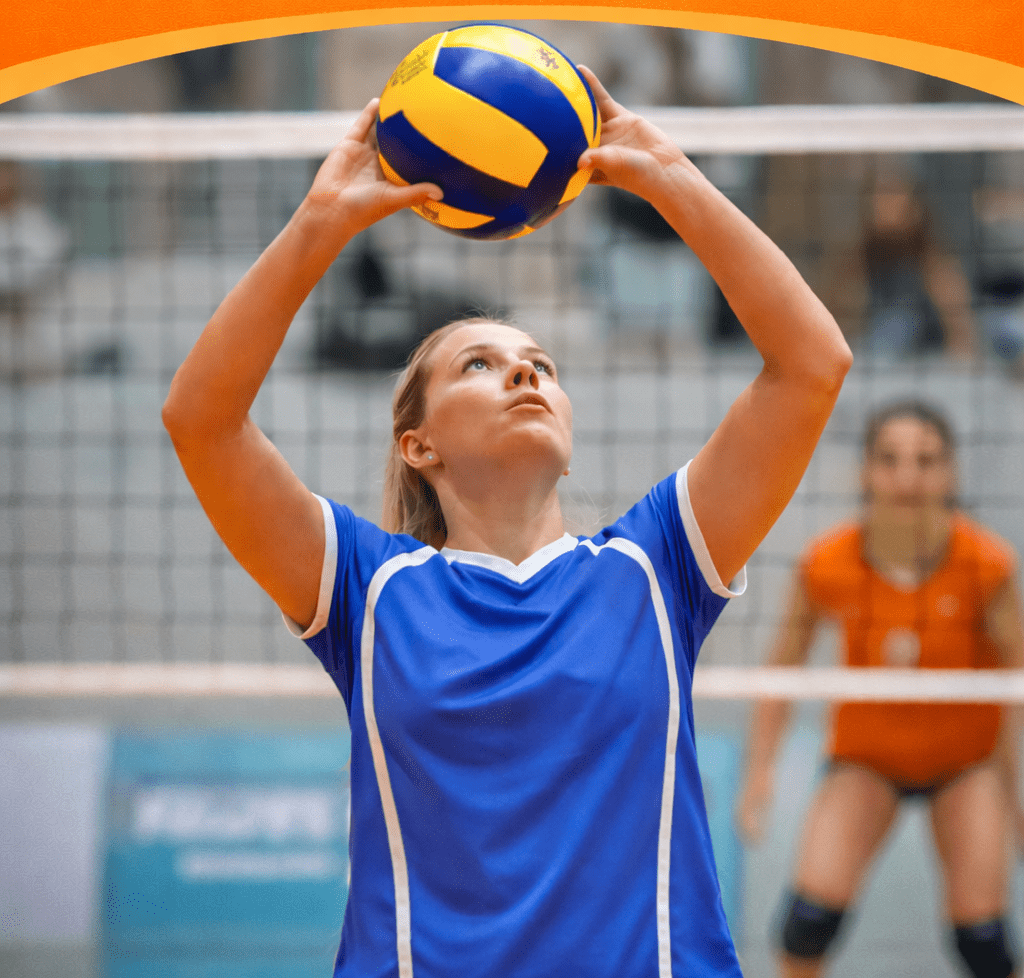
The setter runs the offense. “Good setting” is greater than clear arms: it’s decision-making (who/when), location (the place the ball arrives), and tempo administration (how briskly/what rhythm), all whereas managing danger primarily based on cross high quality and match context. Nice setters constantly flip imperfect conditions into hittable swings, they usually manage teammates so the group performs sooner, calmer, and extra related.
Associated:
What a setter does (function definition)
A setter’s core job is to make your offense predictable on your hitters and unpredictable for the opponent.
In most techniques, the setter:
- Takes second contact (when doable) and delivers a set that creates an assault.
- Shapes your offense by selecting goal, tempo, and distribution.
- Connects your group’s “first contact actuality” (the cross/dig) to your “finest probability to attain.”
A sensible definition coaches can use within the gymnasium:
The setter’s job is to create the highest-quality swing out there, as typically as doable, with the bottom price in errors.
In case you’re constructing function readability throughout your group, begin with the Positions & roles hub
Choice hierarchy (what comes first)
A standard mistake is treating setter choices as “run the play we referred to as.” In actual volleyball, decision-making is a hierarchy.
Right here’s a easy order that holds up throughout ranges:
- Can we run one thing quick or easy sufficient to be on time?
If the cross/dig gained’t assist it, don’t power it. - Who is out there and in rhythm proper now?
Availability contains strategy timing, spacing, and whether or not the hitter is definitely prepared. - The place is the most effective match-up or the most important stress level on their block/protection?
Search for seams, late middles, small blockers, or a defender you may transfer. - What’s the lowest-risk option to get a very good swing?
Particularly at youthful ranges: cut back “no-chance” units. - What did we simply present, and what’s going to they anticipate subsequent?
Sequencing issues, however solely after you may reliably produce swings.
Teaching cue: If a setter learns to “save the rally first,” their resolution high quality improves rapidly.
For a fuller rationalization of what out-of-system’ means (and why it drives setter selections), click on right here.
Location vs tempo vs danger (tradeoffs)
Set high quality is a three-way steadiness. Bettering one typically prices the others except the setter may be very expert.
Location
- The ball ought to arrive the place your hitter can assault with a full strategy and imaginative and prescient.
- “Good” is much less essential than repeatable (identical window, identical top, identical spacing).
Tempo
- Sooner tempo can beat blocks, however requires cleaner first contact and tighter connection.
- Slower tempo can stabilize chaos, however can permit the block to get set and arranged.
Threat
- Threat will not be “unhealthy.” It’s a device.
- Threat ought to rise when: cross high quality is excessive, your hitter has a bonus, otherwise you want a degree.
- Threat ought to drop when: you’re out of system, your hitter is late/off, or errors are costing you runs.
A sensible phrase for setters:
“Quick when you may, excessive when you will need to, secure when it issues.”
Associated:
Management/group tasks
Even setters who aren’t vocal leaders nonetheless have an organizing function. The perfect ones do it constantly.
Key tasks:
- Pre-rally plan: affirm serve obtain/protection cues and who takes second ball if wanted.
- Tempo agreements: every hitter is aware of the setter’s timing and “window.”
- Reset after chaos: next-ball focus, not blame—particularly after a nasty connection.
- Match administration: acknowledge when a hitter wants confidence, when to experience the recent hand, and when to simplify.
At increased ranges, setters additionally handle:
- Data: speaking block/protection reads to hitters.
- Opponent tendencies: which blockers are committing, which defenders are dishonest.
How to decide on a setter (standards + tradeoffs)
Selecting a setter is normally a selection between completely different strengths. The most important mistake is selecting primarily based on one trait (typically arms) and ignoring the remainder.
Core standards
- Choice-making beneath strain: makes rallies “higher,” not simply prettier.
- Second-contact reliability: will get to the ball and produces hittable units.
- Connection potential: can develop timing with hitters and repeat areas.
- Competitiveness and composure: stays purposeful when the cross breaks down.
- Communication/group: makes others play sooner and clearer.
Widespread tradeoffs
- Finest athlete vs finest organizer: an elite athlete can “clear up” rallies, however the most effective organizer can elevate the entire group.
- Palms vs toes: arms matter, however at most ranges toes and early motion matter extra.
- Measurement/blocking vs setting high quality: top helps within the entrance row, but when it prices you offense, it’s hardly ever price it.
Extra element (with a choice tree): Choosing a setter.
The way to practice setters
Setters enhance quickest when coaching is constructed round three pillars: motion, decision-making, and connection – not simply setting reps.
Excessive-value priorities:
- Transfer early, arrive balanced: studying first contact, beat the ball to the spot, set off two toes when doable.
- Out-of-system competence: bump units, excessive balls, and predictable “get-us-a-swing” selections.
- Choice reps with constraints: “provided that” guidelines (solely run fast if cross is inside X window, and many others.).
- Connection periods: repeated reps with every hitter to stabilize window/tempo.
- Communication reps: pre-rally calls, hitter preferences, and post-point changes.
Associated coaching posts:
FAQs
Ought to my finest athlete be the setter?
Usually, however not robotically. In case your finest athlete may manage the offense and make good choices beneath stress, it’s an awesome match. If not, it’s possible you’ll get extra worth placing that athlete the place they will rating extra immediately.
What makes a setter “good”?
Constant choices + hittable areas + steady tempo, particularly when the primary contact is imperfect.
How essential is top/blocking?
It issues, however normally lower than folks assume. A taller setter can assist your block within the entrance row, however a setter who creates higher swings will sometimes influence extra factors throughout a match.
How do you practice decision-making?
Use game-like reps with easy guidelines: establish cross high quality, select from 2–3 choices, and rating outcomes (good swing vs no-chance vs error). Choice-making improves when selections have penalties.
What’s a very good set location?
A location your hitter can assault repeatedly with full strategy, good imaginative and prescient, and minimal reaching. “Constant window” beats “good spot as soon as.”
How do setters talk with hitters?
Earlier than matches: agree on tempo and window. Throughout matches: brief, particular suggestions (“sooner,” “increased,” “extra inside”) and clear plan cues (“I’ll discover you early,” “bail is excessive 4,” and many others.).
What ought to a setter do out of system?
Prioritize a hittable, low-risk ball to a dependable attacker (typically excessive exterior), preserve spacing constant, and cut back errors. Out of system is the place setters separate.
Is setting largely arms?
No. At most ranges, setting success is pushed by motion, timing, and resolution high quality first. Clear arms matter most as soon as these are in place.
How do setters get higher rapidly?
Extra high quality contacts in actual context: motion + resolution + connection reps beneath strain, not simply remoted setting.
***
6 Steps to Higher Practices – Free Information

Subscribe to my weekly publication right this moment and get this free information to creating your practices the most effective, together with hundreds extra teaching ideas and knowledge.